The Auric™ Platform

Five subsystems. One integrated node.

The Auric platform is the productized form of CryptEco's distributed bioenergy node. Three physical subsystems handle feedstock conversion, energy conversion, and plant growth. Two software subsystems orchestrate, predict, and mirror them.

Reference configuration

Auric C5-A-50 — the platform you can deploy today.

The C5-A-50 is the reference configuration being installed at Node Zero. It pairs a Pulse™ digester sized for ~5–8 tons of organic feedstock per day with a 50 kWe nameplate ExerGen™, plumbed into an EGrow Labs greenhouse loop, orchestrated by Aurixen OS™.

Electrical

50 kWe

Nameplate continuous output, ExerGen

Thermal

~120 kWth

Recoverable heat (jacket + exhaust)

CO₂ capture

~70 kg/hr

Captured from flue stream for greenhouse use

Footprint

< 0.5 acre

Excluding greenhouse

Anaerobic digester tanks at night with cyan facility lighting
01 · Feedstock conversion

Auric Pulse™

Anaerobic digester · Biogas production

Auric Pulse is the front end of the platform — a continuous-flow anaerobic digester that converts organic waste streams into biogas and a nutrient-rich digestate. Pulse is sized to match the feedstock available at the host site, not a one-size-fits-all skid.

The reactor uses a mesophilic process optimized for mixed agricultural feedstocks: livestock manures, crop residues, food processing waste, and seasonal silage. Retention time, mixing rate, and temperature are continuously controlled by Aurixen OS based on real-time biogas composition and substrate analysis.

Output: raw biogas at roughly 55–65% methane content, ready to be upgraded to RNG or burned directly in ExerGen. Digestate is separated and returned to the greenhouse loop as a nutrient stream.

Process
Mesophilic CSTR
Feed rate
5–8 t/d organic
Retention time
22–28 days
Biogas CH₄
55–65%
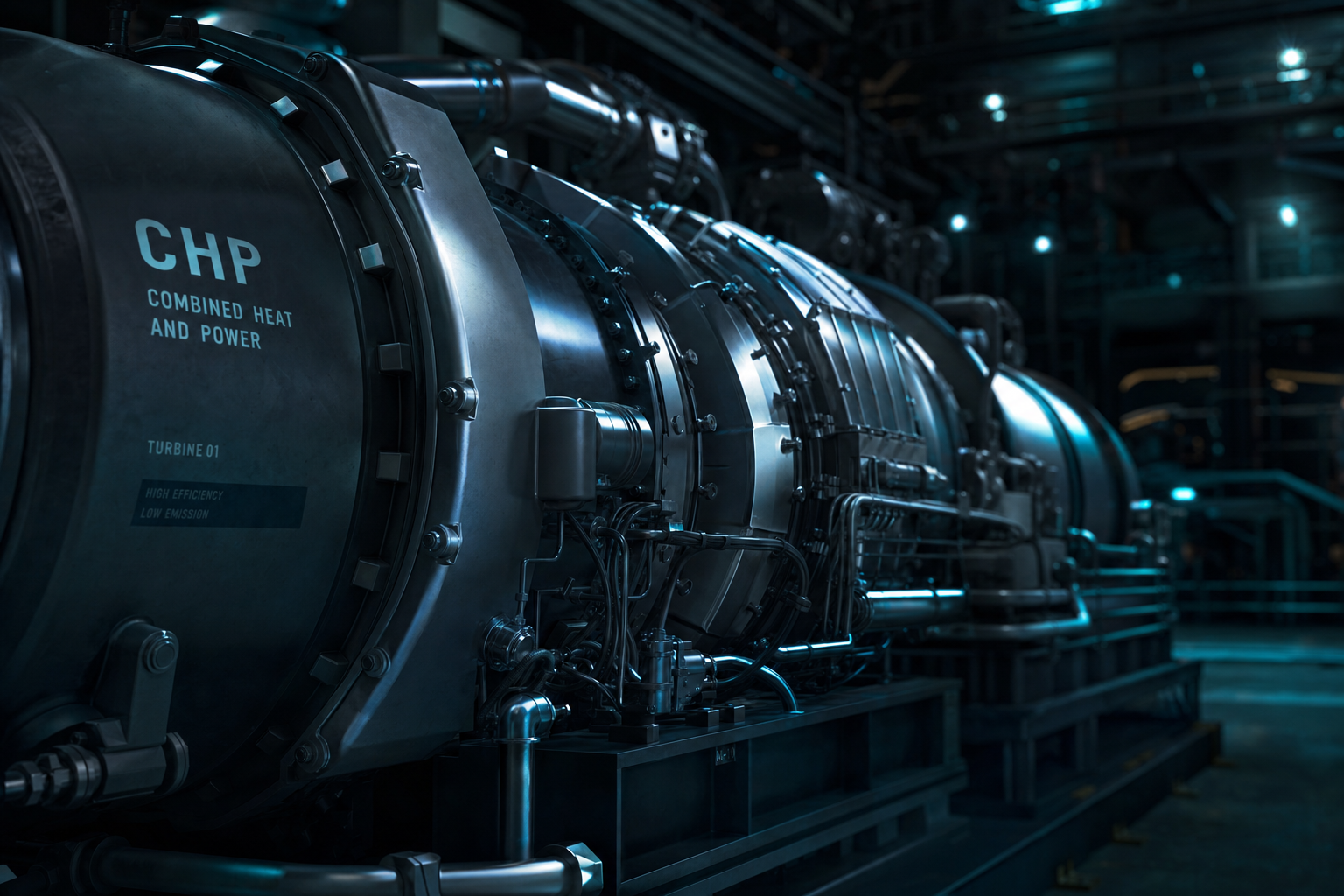
Auric ExerGen combined heat and power equipment
02 · Energy conversion

Auric ExerGen™

Combined heat and power · The physical Auric system

Auric ExerGen is the combined heat and power core of the platform — the physical Auric system. It receives biogas from Pulse and produces three useful outputs simultaneously: electricity, recovered heat, and a CO₂-rich exhaust stream.

The reference C5-A-50 configuration is a 50 kWe nameplate unit selected for the operating profile of a distributed agricultural site. Electrical efficiency is in the 33–36% range at design point; thermal efficiency adds roughly another 45–50% via jacket water and exhaust heat exchangers, bringing total system efficiency above 80%.

ExerGen is the only Auric subsystem where the word “ExerGen” applies to the physical hardware. Software references to exergen.* in Aurixen OS denote the runtime adapter that controls the physical unit — not a separate product.

Nameplate
50 kWe
Elec. efficiency
33–36%
Thermal recovery
~120 kWth
Combined eff.
> 80%
03 · Orchestration

Aurixen OS™

Operating system · Distributed energy + agriculture

Aurixen OS is the operating system for an Auric node. It is the software layer that knows everything about every subsystem at the same time — biogas composition, ExerGen load, greenhouse CO₂ setpoint, grid prices, weather forecast — and decides what to do with it.

The OS exposes a single data model across the entire node. Operators don't have to context-switch between four vendor SCADAs and a spreadsheet. Engineers don't have to write glue code to move data between subsystems. Aurixen™ is the substrate the rest of the platform runs on.

Aurixen is built to be deployed across many nodes. As CryptEco rolls out beyond Node Zero, each new site joins the same fleet model — same telemetry schema, same operating runbook, same dashboards.

Architecture
Event-driven, edge-first
Telemetry
~2k tags / node
Control loop
1 Hz physical · 1 min econ.
Fleet-aware
Yes
Abstract circuitry and light traces representing the Aurixen OS architecture
04 · Intelligence

Auric AI™

Predictive and optimization layer inside Aurixen OS

Auric AI is the predictive and optimization subsystem inside Aurixen OS. It is not a chat product; it is a set of models that forecast biogas yield, project ExerGen output, schedule greenhouse climate setpoints, and choose between electrical-sales versus RNG-export modes hour by hour.

Models are trained on a combination of process data from Node Zero, public weather and grid-price feeds, and domain models of anaerobic digestion and CHP behavior. Auric AI runs as a controller adjunct — Aurixen OS retains final authority over physical setpoints, with AI-recommended actions explainable and overridable.

The goal is not to replace operators. It is to make a single operator able to run more nodes than they otherwise could, with clearer recommendations and tighter economic optimization.

Class
Process forecasting + econ. opt.
Horizons
1 hr · 24 hr · 7 d
Mode
Recommend, not autonomous
Telemetry
Continuous learn-from-fleet
05 · Mirror

Auric DT™

Digital twin · Real-time mirror of every node

Auric DT is the digital twin of an Auric node. It is a continuously updated software representation of the physical system, accurate enough to be used for what-if analysis, training, and remote troubleshooting.

For operations, DT is how a remote engineer inspects a node without flying to Kentucky. For underwriting, DT is how a capital partner inspects performance against forecast. For permitting, DT is where we model emissions and offtake scenarios before a single piece of equipment is procured.

Auric DT is also the basis of the next Auric configuration. Before we build the C-10 (a hypothetical larger node), we will model it in DT against the historical Node Zero dataset.

Fidelity
Process + economic
Sync
Sub-minute from live node
Use
Ops · UW · Permitting
Replay
Full historical state
Next: Technology Deep-Dive

Go a layer deeper into the engineering.

Substrate chemistry, retention time, exhaust heat recovery, Aurixen OS architecture, and the controlled-environment-agriculture interface.